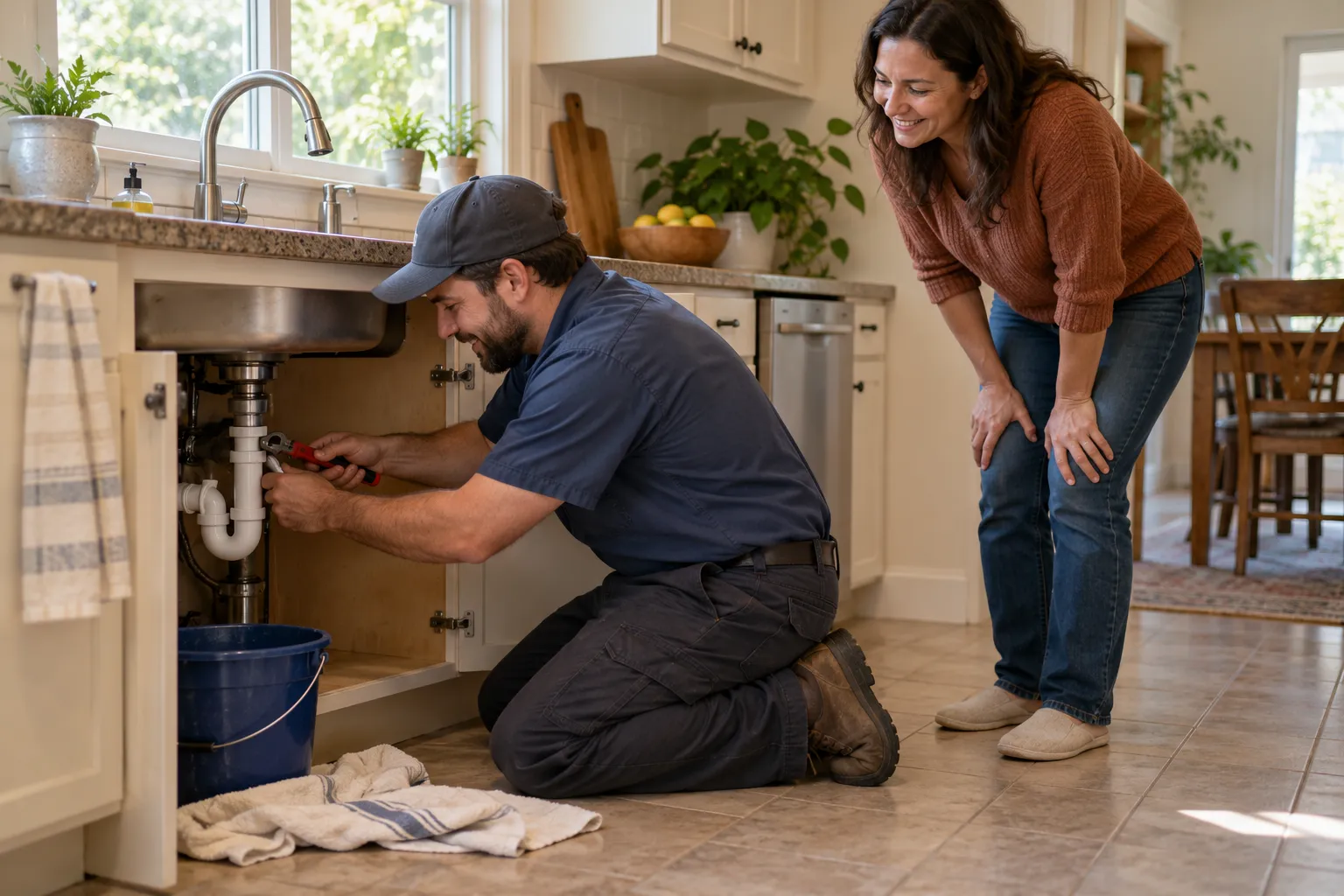
Emergency Plumbing Help for Homeowners
Request an estimate from a local provider
A plumbing emergency feels chaotic. This page puts it in order. First, you stop the water. Next, you check what is urgent and what can wait. Then you connect with a provider who can do the work.
Specialistwage Plumbing is a referral service. The providers in our network do the plumbing, not Specialistwage Plumbing. We connect homeowners in Delray Beach and the Delray Beach area with independent local providers. Each provider sets its own availability, pricing, and scope of work. Use the steps below to understand your choices, ask better questions, and compare a written quote before you agree to anything. You will also find tips for storm season, water heater trouble, and what to check once the repair is done.
Plumbing Emergency? Do This First
Follow these steps in order. They take a few minutes and can limit damage while you wait for help.
1. Stop the water. Find the main shutoff valve and turn it clockwise. In many block homes on slabs, it sits near the street, by the meter, or on an outside wall. 2. Shut off power if water is near outlets. Only do this if the breaker panel is dry and safe to reach. 3. Open a low faucet. This drains pressure from the lines. 4. Move valuables. Lift rugs, electronics, and boxes off wet floors. 5. Take photos. Capture the source and the damage.
What Counts as a Plumbing Emergency?
Not every leak is an emergency. Sort your problem into one of three groups.
Urgent now
- A burst or split pipe spraying water
- Sewage backing up into tubs, showers, or floor drains
- A water heater leaking heavily or making loud banging sounds
- No water at all, with signs of a break
- Any smell of gas (leave the home and contact your gas utility first)
Urgent soon
- A slow, steady drip you can contain with a bucket
- A toilet that will not flush, when you have another bathroom
- A supply line leak you can stop at the fixture valve
Can usually wait
- A dripping faucet
- A running toilet
- Low pressure at one fixture
When in doubt, treat it as urgent. A short talk with a provider can sort it out.
Know Your Options
You usually have three paths. Each has trade-offs.
- Temporary stop. A provider shuts off a section, caps a line, or clamps a split. This buys time. It is often the simplest fix, but it may not last.
- Targeted repair. The provider replaces the damaged piece only. This suits a single failed joint, valve, or fitting.
- Larger replacement. If pipes are old or failing in several spots, a provider may suggest replacing a longer run.
Ask which option fits your situation and why. Ask what happens if you choose the smaller one first.
Why Moving Fast Matters
Water spreads. It soaks drywall, baseboards, and flooring. In a humid climate, damp materials can grow mold within a few days. Block walls and slab floors hold moisture, so drying takes longer than you might expect.
Fast action also keeps the repair smaller. A leak caught early is often a simple fix. A leak left running can lead to a bigger job and more cleanup.
Many providers can respond quickly, but availability varies. Request a callback to check provider availability.
What an Emergency Plumber Does
A provider usually works in this order.
1. Find the source. They trace the leak or blockage. 2. Make it safe. They stop the flow and protect the area. 3. Explain the options. They describe what they found and what each fix involves. 4. Give a written quote. You approve the work before it starts. 5. Do the repair. They fix or replace the failed part. 6. Test it. They check pressure, flow, and fixtures.
You are in charge of the decision at step 4. Do not feel rushed past it.
Burst Pipes and Supply Leaks
In this region, hard freezes are rare. Bursts here more often come from age, corrosion, high water pressure, shifting soil, or a past repair that failed. Older homes from the 1970s and 1980s may have galvanized or early copper lines that wear thin.
Signs to watch:
- A water meter that keeps moving when everything is off
- Damp spots on a slab floor or warm tile
- A sudden drop in pressure
- The sound of running water in the walls
Slab leaks can sit under the floor. A provider may use listening gear to find them. Options include repairing the line in place, rerouting it overhead, or replacing a section.
Water Heater Emergencies
A failing tank can leak, rust, or bang. Here is the order to follow.
1. Turn off the power or gas supply to the heater. 2. Close the cold water valve on top. 3. Drain a little water if the tank is leaking. 4. Keep people and pets away from hot water.
Then ask a provider about repair versus replacement. A small valve problem may be a quick fix. A leaking tank body usually means replacement. In condos, check building rules before work begins.
Storm Season Readiness
Summer storms are almost daily here, and hurricane season runs from June to November. Heavy rain can overload systems. Power loss can stop sump or lift pumps. Flooded yards can stress lines.
Before a storm:
- Locate your main shutoff and test that it turns
- Keep a flashlight and a pipe wrench nearby
- Know where your water heater shutoff is
- Save a provider contact number in your phone
After a storm, expect busy schedules. Providers handle many calls at once, so start early and stay flexible.
How to Choose a Provider
Use this short checklist.
- Ask if they are licensed for your area
- Ask if they carry insurance
- Ask for a written quote before work starts
- Ask what is included and what could change the price
- Ask about warranty terms on parts and labor
Be cautious if someone refuses to put the price in writing or asks for full payment up front.
What About Insurance?
Some policies may cover sudden damage, such as a burst pipe. Gradual leaks and wear are often treated differently. Check your policy or ask your agent. Providers can often help document damage for a claim, so keep photos, notes, and receipts.
After the Repair
Finish with this list.
- Run every fixture and look for leaks
- Check the ceiling and walls below for new stains
- Dry wet areas with fans and a dehumidifier
- Keep your paperwork and warranty details
- Watch your water meter for a day
If you see moisture or a musty smell after a few days, contact the provider again. Next step, then next step. That order keeps you in control.
What's Included
Fast Triage
Sort the problem into urgent now, urgent soon, or can wait, so you know how quickly to move and what to tell a provider.
Leak Stopping
Providers can shut off, cap, or clamp a failing line to limit water damage while a lasting fix is planned.
Repair or replace choices
A provider explains each option, from a small fix to a longer pipe replacement, with a written quote.
Fixture and heater issues
Help with failed valves, supply lines, toilets, and water heaters that leak, bang, or stop working.
Typical Emergency Plumbing Costs
Prices vary by job, home, access, and timing. These are typical U.S. ranges only. Weekend or night visits may cost more. Always get a written quote before work starts, and ask what could change it.
| Service | Typical range | Notes |
|---|---|---|
| Diagnostic visit | $75 – $250 | Often applied to repair if you proceed |
| Fixture or supply line fix | $150 – $450 | Valves, braided lines, shutoffs |
| Burst pipe repair | $300 – $1,500 | Depends on pipe type and access |
| Slab leak repair | $500 – $4,000 | Leak finding adds cost; rerouting costs more |
| Water heater repair | $150 – $600 | Valves, thermostats, elements |
| Water heater replacement | $1,200 – $3,500 | Tank size and fuel type matter |
How It Works
Stop the water
Close the main shutoff, protect the area, and take photos of the source and damage.
Share the details
Tell us what is happening, where it is, and what you have already done.
Review the options
A provider explains the repair choices and gives a written quote before starting.
Approve and follow up
Approve the plan, check the finished work, and keep your records for any claim.
Why Call Specialistwage Plumbing
Clear Steps
You get an ordered plan: what to do first, what can wait, and what to ask next.
Local Providers
Connect with independent providers who know local homes, from block construction to condo buildings.
Options First
Understand repair choices before work starts, so you can compare quotes and decide with confidence.
Short Path
Skip endless searching. Reach a provider in fewer steps.
Other Services
Need emergency plumbing help in Delray Beach?
Describe your plumbing problem and request an estimate. Specialistwage Plumbing will connect you with an independent local provider in the Delray Beach area.
No obligationEmergency Plumbing Help FAQ
What should I do first when a pipe bursts?
First, stop the water at the main shutoff valve. Next, turn off power if water is near outlets and the panel is dry. Open a low faucet to relieve pressure, take photos, and then contact a local provider for repair options.
Is a 24 hour plumber available in my area?
Availability depends on the provider. Many can respond quickly, but hours vary. Request a callback to check provider availability for your address and situation.
Will homeowners insurance cover a burst pipe?
Some policies may cover sudden damage, but not wear or slow leaks. Check your policy or ask your agent. Providers can often help document damage for a claim.
Request a callback
Describe your plumbing problem and request an estimate. Specialistwage Plumbing will connect you with an independent local provider in the Delray Beach area.
No obligation