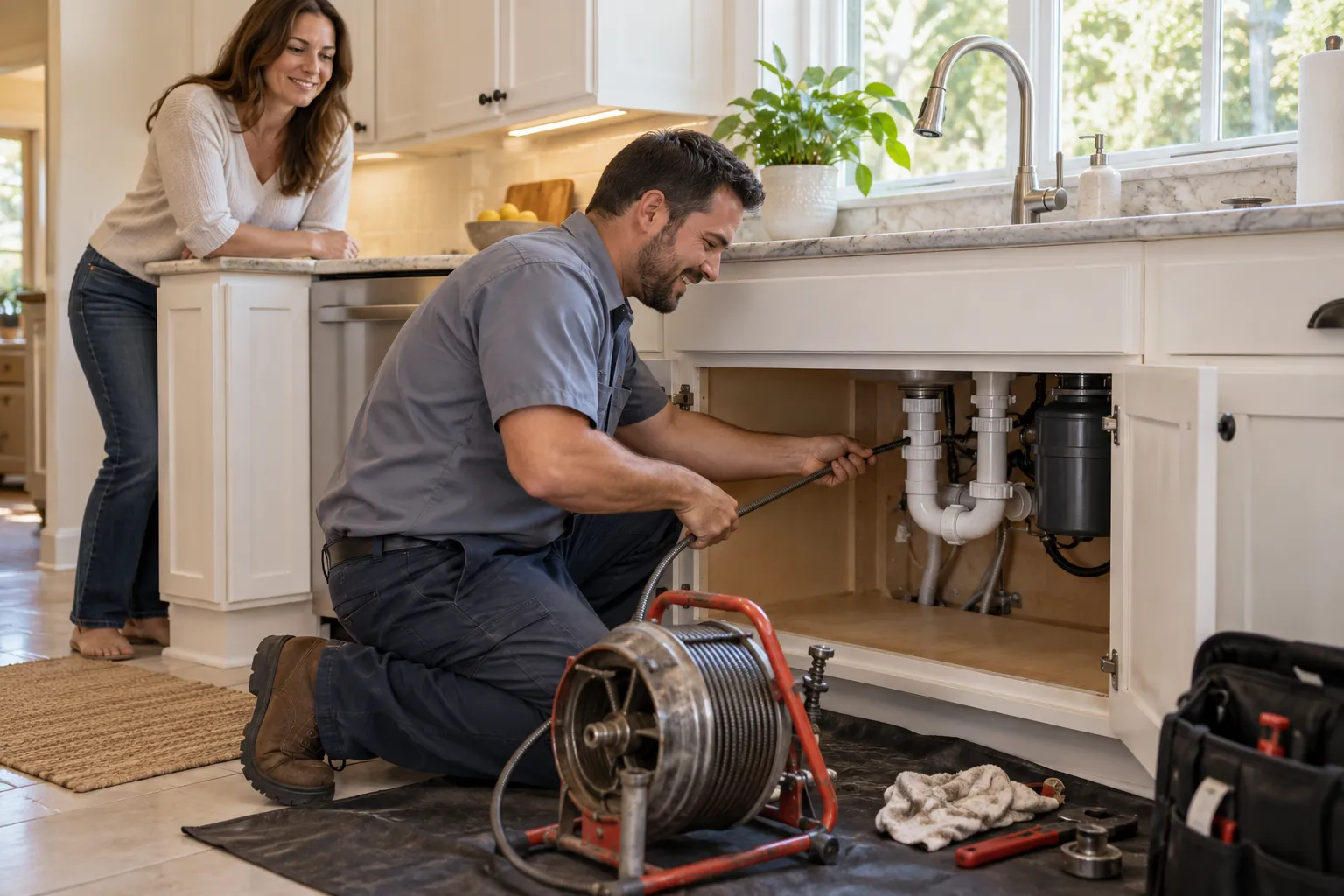
Residential Drain Cleaning for Clogged Home Drains
A clogged drain usually starts small. The sink drains slowly. The shower leaves a ring of standing water. Then one day the water will not go down at all. Specialistwage Plumbing helps you sort out what is happening before anyone starts work.
First, we lay out the likely causes and your options in plain steps. Next, we connect you with an independent local provider in the Delray Beach area. The provider does the work, from basic snaking to camera inspection. Specialistwage Plumbing does not clear drains itself. We keep the path short and organized, so you know what to ask and what to expect. Many providers can respond quickly, but availability varies, so check when you reach out.
Drain backing up? First, stop adding water
A blocked drain gets worse every time water goes down it. Start here.
Do these four things first
1. Stop running water in the house. No flushing, no dishwasher, no laundry. 2. Move rugs and belongings away from the wet area. 3. Note which drains are slow or gurgling. A provider will ask. 4. Keep chemical cleaners out of the pipe. More on that below.
If water is coming up through a floor drain or toilet, treat it as urgent. That water can carry waste, so keep children and pets away.
Request a callback to check provider availability for emergency drain clearing.
One drain or the whole house?
This is the most useful question you can answer. It tells you where the clog is.
One fixture is slow
The clog is probably in that fixture's own drain or trap. This is the simpler case. It is often a hair, soap, or grease buildup.
Several fixtures are slow
When the tub gurgles after you flush, or the drain closest to the floor level backs up first, the clog may be in a shared branch line or the main line. This takes more tools to clear. Tell the provider exactly what you saw.
Know your options
Here are the usual choices, from simplest to most involved.
Option 1: plunger or hand auger
For a single sink or tub, a plunger or a small hand tool may work. Stop if the water does not move after a few tries. Forcing it can loosen pipe joints.
Option 2: machine snaking
A provider feeds a motorized cable into the line. The cable breaks up the clog or pulls it out. This handles most household blockages.
Option 3: hydro jetting
High-pressure water scrubs the inside of the pipe. It suits heavy grease, scale, and some root debris. A provider decides if your pipes can take it.
Option 4: camera inspection
A small camera shows what is in the line. This helps when clogs keep returning. It can also show a cracked or collapsed pipe, which is a different repair.
Pick the least involved option that matches your symptoms, and ask the provider to explain why.
Common causes of clogged drains
- Kitchen: grease, food scraps, and coffee grounds.
- Bathroom: hair, soap film, and toothpaste buildup.
- Toilets: too much paper, wipes, and "flushable" products.
- Laundry: lint and detergent residue.
- Outdoors: tree roots working into small pipe gaps.
Older subdivision homes and condos often have aging pipes with rough inner walls. Debris catches there more easily. Shared condo lines add another factor, since a clog may sit in a line other units use.
Why chemical drain cleaners often make it worse
Store-bought liquid cleaners are tempting. Here is why to skip them.
- They may not fully clear the clog, leaving caustic liquid sitting in the pipe.
- That liquid can irritate skin and eyes when a provider opens the drain.
- Strong chemicals can wear on some pipe materials over time.
If you already used one, tell the provider. They will want to wear the right protection.
Seasonal readiness: storms and humidity
Warm, wet weather puts extra strain on drains. Heavy summer rain can slow the main sewer system and push water back toward low drains. Roots grow fast in humid months and look for moisture in pipes. Many homes here sit on slabs, so pipes run under the floor and a backup shows up at floor level.
Before hurricane season, June to November, it helps to do three things:
1. Clear slow drains while the weather is calm. 2. Check outdoor drains and cleanouts for leaves and debris. 3. Ask a provider about roots if clogs keep coming back.
After a big storm, providers get busy. Reach out early if a drain is already acting up.
Request a callback to ask about scheduling before a storm.
Keeping drains clear
- Use strainers in sinks and tubs.
- Wipe grease from pans into the trash, not down the sink.
- Flush only toilet paper and waste.
- Run hot water after washing dishes.
- Schedule a cleaning if the same drain slows twice in a few months.
Questions to ask the provider
Write these down before you talk.
1. What do you think is causing the clog? 2. Which method will you use, and why? 3. What will it cost, and is there a written quote? 4. Will you use a camera if the clog returns? 5. What should I do to prevent a repeat?
A clear answer to each one means fewer surprises. Some policies may cover sudden damage from a backup, so check your policy. Providers can often help document damage for a claim.
Ready to compare your options? Request an estimate and Specialistwage Plumbing will connect you with a local provider.
What's Included
Clogs in sinks and tubs
Hair, soap, and grease buildup in kitchen and bathroom drains, cleared with basic snaking tools.
Toilet and shower
Slow flushes and standing shower water, handled with the right tool for the fixture.
Main line
Clogs that make several drains back up at once, cleared with larger machines from a cleanout.
Camera checks
A small camera shows what is blocking the pipe and helps explain repeat clogs.
Typical drain cleaning costs
Prices depend on the clog, the pipe, and how easy the access is. These are typical U.S. ranges only. Always ask for a written quote before work starts.
| Service | Typical range | Notes |
|---|---|---|
| Sink or tub drain snaking | $100 – $300 | Single fixture, easy access |
| Toilet clog clearing | $100 – $350 | Higher if the toilet must be pulled |
| Main line snaking | $150 – $600 | Depends on length and cleanout access |
| Hydro jetting | $300 – $900 | Used for heavy grease or buildup |
| Camera inspection | $100 – $500 | Often added when clogs return |
| Emergency or after-hours visit | $150 – $500 extra | Varies by provider and timing |
How It Works
Describe the problem
Tell us which drains are slow, what you hear, and whether water is coming up anywhere.
Review your options
We outline likely causes and the usual ways to clear them.
Get matched locally
We connect you with an independent provider in your area who handles drain clearing.
Approve the quote
The provider explains the work and price. You approve it before anyone starts the job.
Why Call Specialistwage Plumbing
Options laid out first
You see the likely choices and next steps in plain order before any work begins.
Local providers
Independent providers in your area do the work, so you deal with a nearby business.
Clear questions to ask
We share a short list of questions so you can compare quotes and know what to expect.
No obligation
Requesting an estimate does not commit you. You decide whether to hire the provider.
Other Services
Need residential drain cleaning in Delray Beach?
Describe your plumbing problem and request an estimate. Specialistwage Plumbing will connect you with an independent local provider in the Delray Beach area.
No obligationResidential Drain Cleaning FAQ
Why is my drain backing up even after I plunged it?
A plunger only helps with clogs near the fixture. If water still will not drain, the clog may be deeper in the branch or main line. Stop forcing it and ask a provider to check with a snake or camera.
Is it safe to use chemical drain cleaner?
It is usually smart to avoid them. Chemicals may not clear the clog and can sit in the pipe as harsh liquid. They can also wear on some pipes. A mechanical method is a safer starting point for most homes.
How do I know if the clog is in the main sewer line?
Warning signs include several drains slowing at once, gurgling after flushing, or water backing up at the drain closest to the floor level of the house. Those signs point to a shared line, so a provider should inspect it soon.
Request a callback
Describe your plumbing problem and request an estimate. Specialistwage Plumbing will connect you with an independent local provider in the Delray Beach area.
No obligation